Her Corner Office: Jean Poon

Her Corner Office:
Jean Poon

The year 2021 saw diversity, equity, and inclusion make it to the top of the agenda for most firms. However, we still have a long way to go before we truly achieve the balance that reflects our society’s reality.

Launched in succession to our Women in Business report last year, our new global series, Her Corner Office, brings to light the stories of opportunities, challenges, and achievements that catapulted leading women executives to success.

Our next episode features Jean Poon, former Talent Acquisition Director, Asia-Oceania, Dassault Systèmes. A global citizen from the healthcare industry, Jean shares with us her views on diversity in leadership – even among women leaders; what she looks for while interviewing potential candidates; and the different regional nuances between Asian women leaders versus leaders from the West.

Jean also offers advice for aspiring women on their way to the corner office.

About Jean Poon

Jean Poon is a seasoned woman leader in Talent Acquisition and Human Resources.

She is well respected in the industry, with over 20 years of diverse experience from HR business partnering to Talent Acquisition to Talent Development across various industries: Life Sciences, FMCG and Technology.

Her last few roles include Talent Acquisition Director, APAC with Johnson & Johnson, Global Talent Acquisition Lead with Shire (now part of Takeda) and APAC Talent Acquisition Head with Dassult Systemes.
Jean is a true “global citizen” who has lived and worked in many countries across 4 contingents: U.S. Australia, China, Hong Kong, UK and she is currently residing in Singapore with her lovely husband and her one year-old son.

Jean is now an entrepreneur and thought leader in healthcare.

Watch the full conversation between Ivan and Jean in the video above!

Our Diversity Discussion Needs a Refresh!

A couple of months ago, Arnaud Despierre (迪安诺)and Kaifeng Wang hosted a series of discussions with over 30 leading CEOs on the need for Diversity of Thought and the relevance of new ideas and fresh thinking that can help move the needle on business performance. These findings were published by the Strategic HR Review.

The purpose of the paper was to provide a practical framework for business and human resources (HR) practitioners to drive diversity in their organizations in a manner that can promote better business results.

“The authors found an overwhelming alignment on how CEOs think about how to promote diversity of thought in their organizations. At a high level, the authors agreed that this is a complex issue that cannot be easily measured and needs to be tackled by using a holistic approach across several dimensions.”

These dimensions included:

  • The need to use a context-based definition of diversity
  • The pitfalls of measuring diversity by using an overly narrow lens (e.g., gender or ethnicity)
  • The requirement to create a bias-free culture where diverse opinions can flourish and be listened to
  • The need for supporting HR systems and processes.1

Last month, Kingsley Gate invited the CEOs to discuss the key findings of the paper and to evaluate the ongoing discussion on diversity. Below is a quick synopsis of the key findings and the ensuing result of the event.

Key Findings of the paper

  1. Your aim must be strategically inclusive of diversity
  2. Ensure an expansive and inclusive view of diversity
  3. Establish strong support systems within the business environment
  4. Culture, culture, culture – ensure diversity in spirit

An additional finding that came up through our CEO event in Singapore highlighted the most underrated dimension of diversity within Asia-Pacific: Disability.

Gender did not get a single vote which leads us to an important question, do we need to refresh the diversity debate?

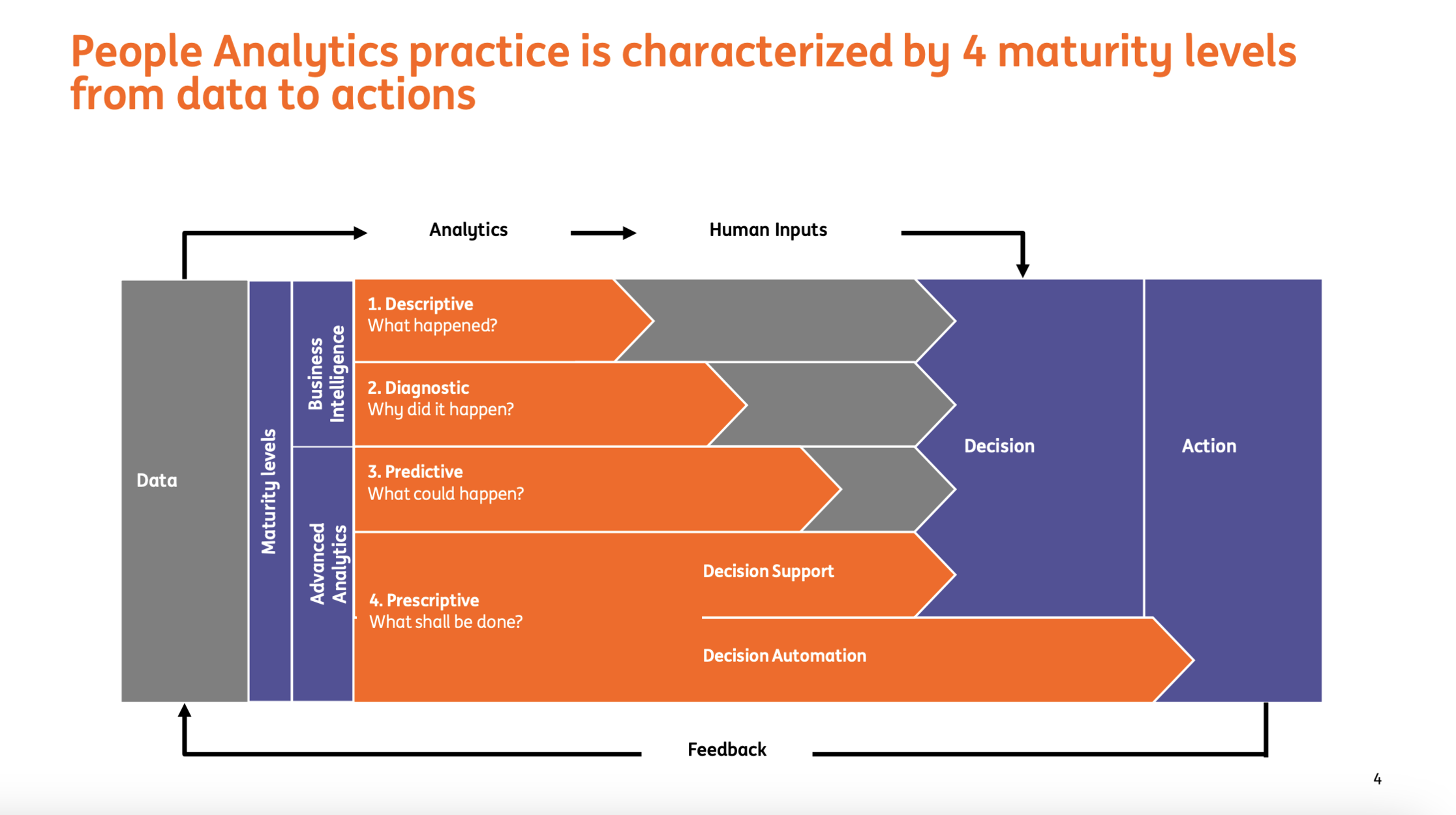
The Future of People Analytics in HR

Your analytics should be related to your people strategy and your people strategy to your business strategy.

Luigi Maria Fierro

What are people analytics?

What are the challenges and opportunities that it presents—and why is it beneficial to prioritize people analytics in your agenda?

Luigi Maria Fierro, Global Head of HR Strategy and People Analytics at ING, reveals all in his conversation with Arnaud Despierre, Asia Region Leader at Kingsley Gate Partners.

The Future of People Analytics in HR

Taken from Luigi Maria’s presentation.

Together they unravel the future of people analytics in HR and its relevance to the Asia-Pacific region. Watch the full conversation in the video.

The Pros and Cons of a Non-Executive Director Role

At a basic level, boards can be divided into two sets of roles – executive and non-executive.

Together, they represent the interest of all shareholders, including minority shareholders, as they fulfill the financial regulators’ basic governance and reporting requirements and provide guidance to the CEO and executive team.

Additionally, the board directors also:

  • Help manage capital market expectations and investor relations
  • Provide leadership during major governance or financing events (e.g., funding/IPO, M&A takeover attempts, liquidity events)
  • Help manage and mitigate enterprise-level risk (including Group-level crisis management)
  • Drive CEO succession 

Shifting the focus to non-executive director roles, what are the pros and cons one must keep in mind as one applies for the said role? Arnaud Despierre and Andy Davies disclose all in their webinar.

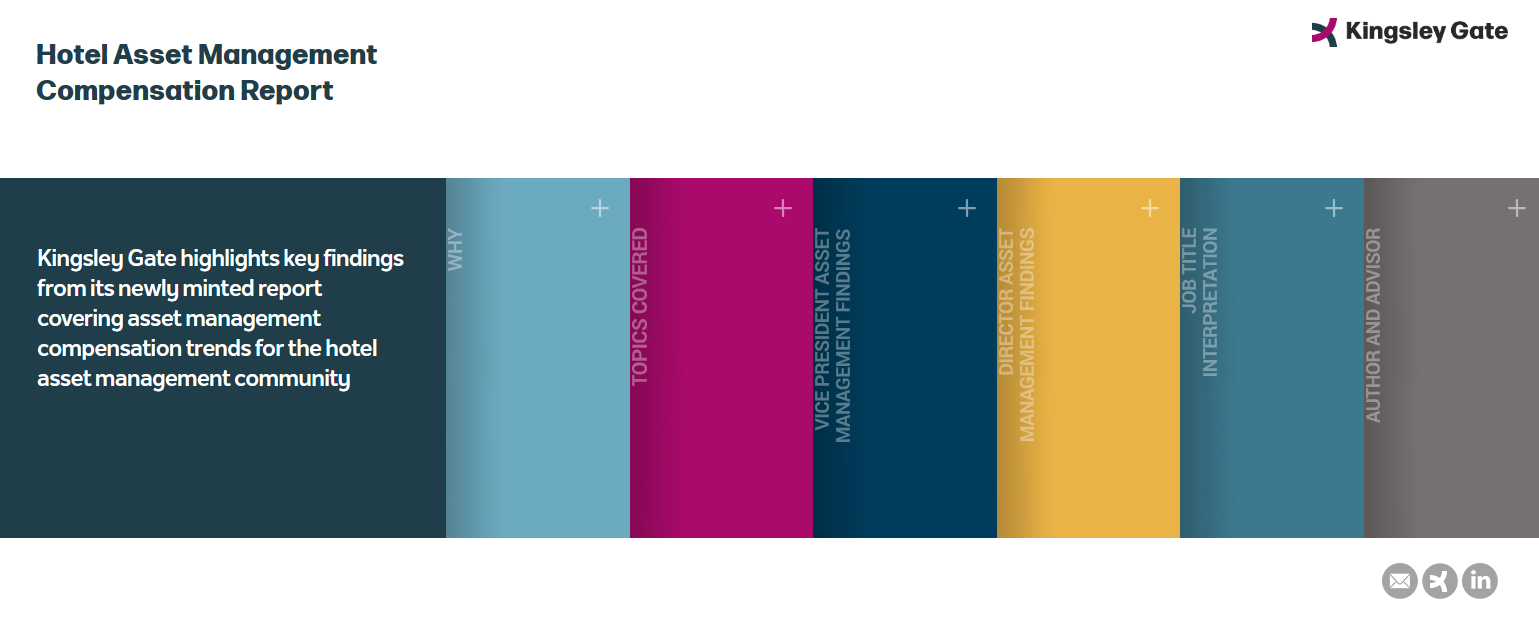
Hotel Asset Management Compensation Report – Key Findings

Kingsley Gate highlights key findings from its newly minted report covering asset management compensation trends for the hotel asset management community.

WHY?

This study is designed to provide current and credible compensation trends for the hotel asset management community allowing owners to attract and retain talent. Participants are from public lodging REIT’s, private equity groups, investment management companies, owner/operators, and third-party asset management companies.

All data submitted is treated as highly confidential and only aggregate results are reported – individual data will not be disclosed under any circumstances.

Access the key findings from the Hotel Asset Management Compensation Report below.

Working with AI in HR: A series

Kingsley Gate Partners presents the second in a series of conversations focusing on Reinventing HR. This four-part discussion, hosted by Arnaud Despierre (迪安诺) and Kaifeng Wang, highlights the role of Artificial Intelligence in the Human Resources function.

We have with us Jason Tamara Widjaja, Director of Artificial Intelligence at MSD. For more than a century, MSD has been at the forefront of research, bringing forward medicines, vaccines, and innovative health solutions for the world’s most challenging diseases.

  • Our first part takes us through the relevance of AI in HR and the leading AI-led technologies available today to the function.

“AI for insights; AI for automation; and AI for innovation, are the three buckets we can frame AI in HR into.”

  • Our second part takes us through the ethics involved in using AI in HR and where must one draw the line between what is technically possible versus what is socially acceptable.

“The more risky AI applications are, the more AI Ethics are required.”