

Awareness and sensitivity regarding cultural impacts on decision making lead executives in global settings to heightened effectiveness
Senior executives routinely lead decision-making processes and conduct work across national cultures. It’s not uncommon, therefore, for an executive’s remit to mandate that they tackle both objectives simultaneously.
Decision making is often “a social exercise” according to Andy Molinsky, author of Global Dexterity: How to Adapt Your Behavior Across Cultures without Losing Yourself in the Process and Professor of International Management and Organisational Behaviour at the Brandeis International Business School. Even the most top-down environments require both input and buy-in from multiple parties. Since the way buy-in is achieved varies across cultures, leading decision making in a global setting can require great sensitivity, self-awareness, and investment in relationships.
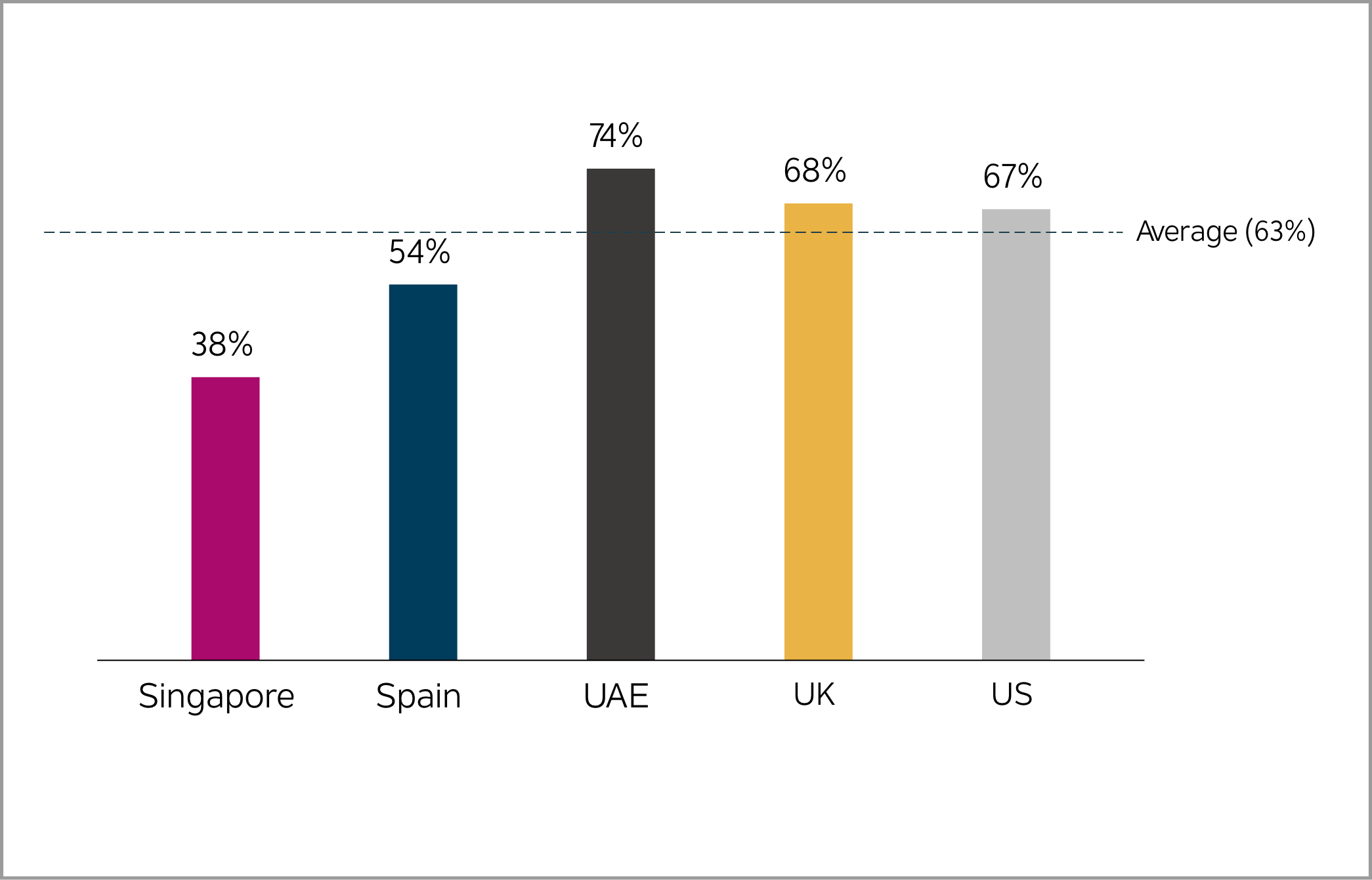
New research from Kingsley Gate, published with FT Longitude, part of the Financial Times Group see another article, has found that decision making is a pain point for senior executives across regions (our sample spanned Singapore, Spain, the United Arab Emirates, the United Kingdom, and the United States).
In fact, 63% said that they have either resigned from a job or considered resigning due to dissatisfaction with how their organization makes decisions (38% Singapore, 54% Spain, 74% UAE, 68% UK, 67% US).
How Culture Impacts Decision-Making Practices

Our findings also support hypotheses that decision-making norms and practices vary along cultural lines and may provide insight to executives involved in decision-making efforts across cultural contexts. It’s worth noting that describing a national culture’s “characteristics” (e.g., high or low power distance, which we describe below), is always in reference to the average tendency in one culture being relatively higher than the average in another. We never intend to convey that all members of any culture act in any particular way.
Furthermore, national culture is just one dimension for understanding what decision-making style an individual or group will apply (see another article covering individual and organizational styles in greater detail). That said, it can be a meaningful one.
Our survey found that respondents in Singapore were more likely to describe their organization’s dominant decision-making style as “top down” (46%) than their peers in Spain (36%) and the United States (37%).
This is consistent with findings from Geert Hofstede’s Culture’s Consequences as well as more recent updates, which can be explored via Hofstede Insights’ Country Comparison Tool. These sources note that “power distance” is higher in Singapore (74), for example, than in Spain (57) and the US (40).
Effective Leading in a Global Environment

Power distance is defined as the way people in a society relate to each other on a hierarchical scale: deference to authority is a trait of high power distance societies.This concept can manifest in decision making norms as Andy Molinsky reminds us: “the greater the power distance, the more the leader will be more apt to make a decision unilaterally”. There are some notable exceptions here (see Erin Meyer’s discussion of Japan’s hierarchical but consensual decision culture here).
Ultimately, investing in relationships and having an ingoing degree of data-informed awareness around potential cultural nuances is the best way to approach a complex cross-cultural decision exercise. Understanding the contextual vantage points from which various stakeholders are operating can help assuage or prevent awkwardness, misunderstanding, and frustration. With solid relationships and cultural sensitivity, the cultural faux pas that do occur can be overlooked and even appreciated as a source of humor, humility, or learning.

 English
  Español de México